Sunday, May 13, 2012

Review: Look at Me

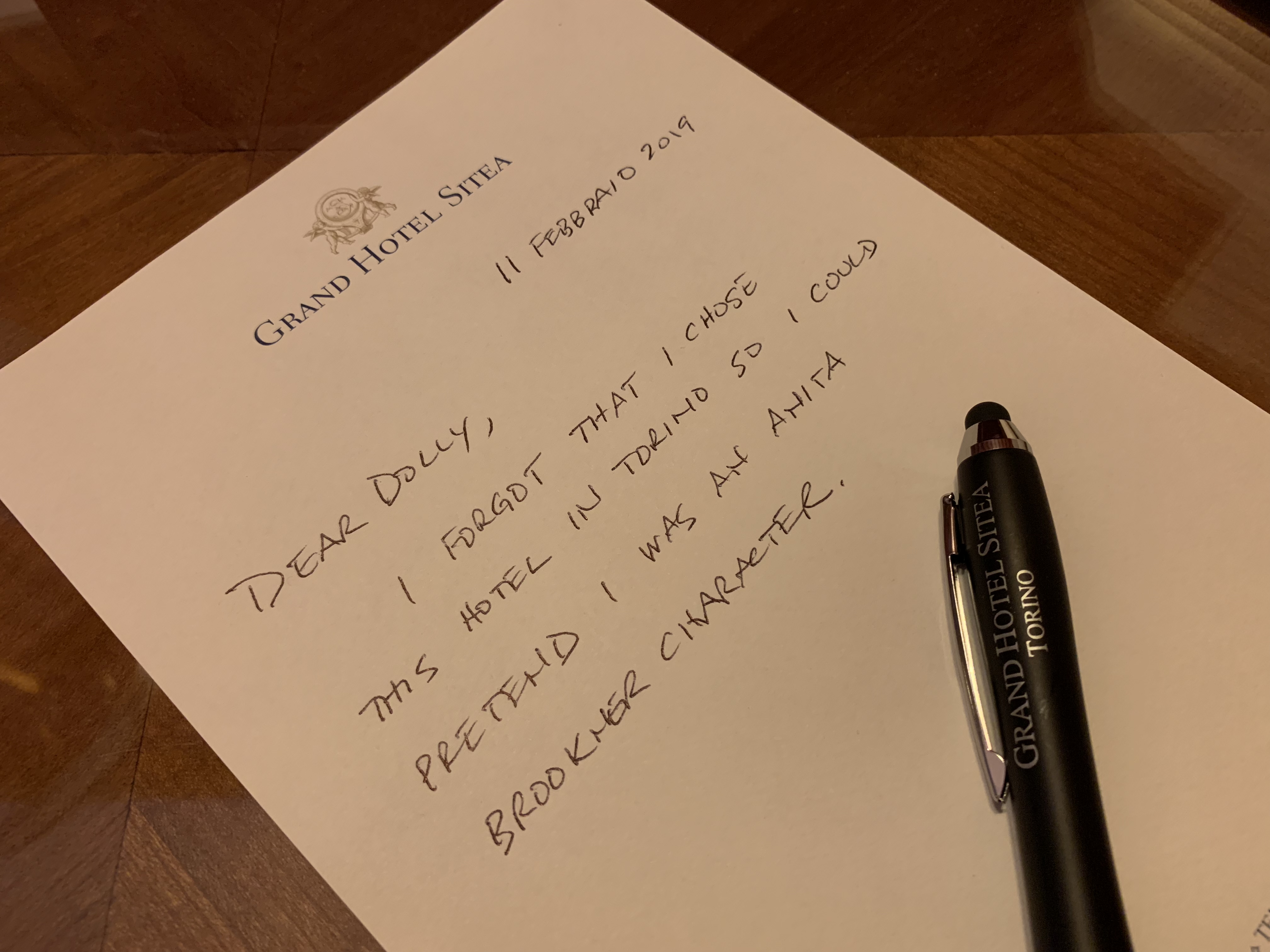
I didn't mean to post two reviews of Look at Me back-to-back, but the earlier one was already posted, and this happened to be the next Brookner for me to re-read. You can find this review posted at My Porch.

I haven't read any Anita Brookner since last year's rather successful International Anita Brookner Day. Having finished all of Brookner's 24 novels, my intention is to re-read all of them in chronological order. Last year for IABD, I knocked off her first two novels The Debut (A Start in Life) and Providence. As much as I have liked all of Brookner's novels on the first go, I found last year when I re-read those first two, that I liked them even more on a second read. Now with her third novel, Look at Me, I find myself of the same disposition. In fact, I think that Brookner's novels which can seem superficially similar, have a depth that really makes them worth a second read--and frankly, I can imagine going back to them again and again for the rest of my life. This is especially comforting since, the once prolific Brookner (at one point a novel a year for about 20 years) seems to have slowed down considerably.

Frances Hinton, who hates being called Fanny, is always called Fanny. She works in a medical research library and like many other Brookner heroines, is miserably comfortable with her routine. That is until Dr. Nick Fraser and his wife Alix decide to make her a part of their social life.
If I moved in with them I would be delivered from the silence of Sundays, and all those terrible public holidays - Christmas, Easter - when I could never, ever, find an adequate means of using up all the available time.
Unlike many other Brookner heroines, Fanny comes to life as a result of this friendship and even starts seeing a doctor, James, who makes her happy.
Although I am naturally pale, I could feel the blood warm in my cheeks. I drew no conclusion from this, and my instinct was correct. I was not falling in love. Nor was there any likelihood that I might. But I was being protected, and that was something that I had not experienced for as long as I could remember. I was coming first with someone, as I had not done for some sad months past, and in my heart of hearts for longer, much longer.
Fanny's benign desire for someone to finally pay attention to her is ultimately overtaken by Alix's much less benign, somewhat pathological need to have everyone looking at her instead. Alix uses Fanny for her own amusement and doesn't seem to mind the results. Fanny reflects on her relationship with Alix:
I was an audience and an admirer; I relieved some of her frustration; I shared her esteem for her own superiority; and I was loyal and well-behaved and totally uncritical. Yet she found me dull, intrinsically dull, simply because I was loyal and well-behaved and uncritical.
And it is Alix's need to be at the center of attention that makes her more of a taker than a giver. Alix may have introduced Fanny to James, and enjoyed watching their relationship develop. But when she thinks she is being denied all the details of the results of her matchmaking, or worse, when she realizes that Fanny isn't letting the relationship with James go where Alix thinks it should go, she begins to drive a wedge between Fanny and James. In many ways there is nothing unusual about this story, I think we have all been subjected to the cruel selfishness of so-called friends, and we have all been jilted in romantic relationships. But for Fanny the situation is life changing in a way that she struggles against. She sees her life going in a direction that seems inevitable despite her efforts to alter course.
I could have been different, I think. Once I had great confidence, great cheerfulness; I did not question my purpose or the purpose of others. All that had gone, and I had done my best to replace it. I had become diligent instead of spontaneous; I had become an observer when I saw that I was not allowed to participate. I had refused to be pitiable. I had never once said, Look at me. Now, it seemed I must make one more effort, one more attempt to prove myself viable. And if I succeeded, I might be granted one more opportunity to do it all over again. I did not dare to think what would happen if I failed.
Does she fail? If you have every read Brookner, you probably know the answer to that.

Sunday, March 11, 2012

Review: Look At Me

It only took me a month to get this review from Geranium Cat's Bookshelf posted.


This is a painful little book. Appropriately so, since its theme is melancholia. Frances Hinton is a reference librarian who catalogues images of psychological disturbance while working extremely hard to maintain her own detachment from the complications of living. She lives in a block of flats in Maida Vale that is almost entirely populated by the elderly, walks to work and visits art galleries on long, oppressive Sunday afternoons. She would like to have friends but makes no effort to cultivate them, until she is taken up by the glamorous Nick and Alix, who are the kind of golden couple who are always surrounded by noise and vitality. Frances, who manages to be one of the world's over-thinkers while remaining essentially blind to what is going on around her, questions her own motives in allowing herself to be captivated by them, but utterly fails to interrogate theirs until too late. At the start of the novel she wields her detachment with a good deal of pride, turning sharp little vignettes of her acquaintances into witty short stories, and a novel is planned (it would be very Barbara Pym, I think):

When I feel swamped in my solitude and hidden by it, physically obscured by it, rendered invisible, in fact, writing is my way of piping up. Of reminding people that I am here. And when I have ordered my characters, plundered my store of images, removed from them all the sadness that I might feel in myself, then I can switch on that current that allows me to write so easily, once I get started, and to make people laugh. That, it seems, is what they like to do. And if I manage this well enough and beguile all the dons and the critics, they will fail to register my real message, which is a simple one. 'Look at me,' I would say. 'Look at me.'
I like Brookner, but I think I would like her better if she were more Pym herself. There are some delicious acid touches, especially in the exchanges between Olivia, the other librarian, and the regulars, but this is a serious book and, though brief,  it is at times quite slow. I did rather want to tell Frances ("I do not like to be called Fanny" she tells us and then almost everyone does) to stop thinking and join a film society or something, but at the same time I could understand why she was so guarded, and I didn't want her to be humiliated.

Look At Me shares a theme familiar from many mid-twentieth-century books, the fear of lonely old age. Frances makes monthly duty visits to Miss Morpeth, a retired librarian, and these are difficult occasions. There is little dignity about poverty in the elderly and Frances is afraid that her own future looks bleak. Her memories of her most recent Christmas, alone in her over-large flat with her late mother's housekeeper, lend urgency to her need for company and affection, for disruption to her ordered days.

I don't find Brookner easy to talk about - her writing is elegant and stylish, her wit sparse but dry, yet you wonder if she chooses to write about the alienated because she doesn't like excessive emotion herself. That's something I can understand, even approve of, but it doesn't leave a lot to enthuse about. Indeed, it would be rather ridiculous to try... So her novels are an occasional, if muted, pleasure. It must be some twenty years since I read Hotel du Lac. That's about the right interval, I should think.

Thursday, November 3, 2011

Review: Strangers

    
This review of Strangers was posted recently by Ti at Book Chatter.

The Short of It:
Amusing, sharp and unusually accommodating… these characters give meaning to the term, “growing old gracefully.”

The Rest of It:
Paul Sturgis is a 70-something bachelor living in a quiet, London flat. Never married, and having only one living relative, a distant cousin named Helena, Paul finds himself wandering about looking for something but he’s not sure what. To avoid the dreaded Christmas invitation from Helena, he decides to take holiday in Venice.
In Venice, he meets Vicky Gardner. Vicky is an interesting sort. She is pretty,  recently divorced and essentially homeless since she has no permanent place to call home. She flits from place to place, seemingly happy in her travels. Paul, unusually reserved gives his number to Vicky and then immediately regrets it. How lonely does one have to be to finally realize that at the age of 72, being with someone might be better than being alone?

This was my first Brookner and I enjoyed it immensely. These characters are proper, polite and exceedingly friendly, but utterly lonely. They are “strangers” in that they have no idea how to co-exist with one another. Innocent conversations turn into something else and then before you know it, in walks awkwardness. It’s all incredibly entertaining but in a quiet, understated way.

I understand that Strangers is Brookner’s 23rd novel. I can’t believe it took me this long to read one of her books but now I want to read them all. It’s not as if there was a lot going on in this one, or that it was even a page-turner, but it’s the type of writing that I enjoy. When I writer can take every day things and make them interesting, then he/she has my attention.

Wednesday, August 24, 2011

Talking Posh at the Reunion

This wonderful musing on the recorded voice of Anita Brookner was posted by A Super Dilettante.

"I was dazzled by her at the Courtauld", Neil McGregor, Director of British Museum. PHOTO: Anita Brookner [Art Historian/Novelist] Image Credit: Corbis


I must admit that the best highlight of my weekend was hearing Anita Brookner's voice for the first time on the wireless. I know there are a few people who read this blog know that I adore Anita Brookner's novels. And also we know that she rarely gives interviews so one shouldn't be surprised that one's never heard of Anita's voice.

It was an unexpected pleasure to listen to the BBC Radio 4 programme, The Reunion (the radio programme which reunites a group of people intimately involved in a moment of modern history).

In this edition, the radio presenter, Sue MacGregor reunites five past pupils of London's Courtauld Institute of Art, which pioneered the teaching of art history, has produced countless stars of the art and museum world. Click here to listen to the programme.

Anita Brookner taught Art History at the Courtauld for many years. One of her students (the artist, John McLean) later wrote about Anita as follows, "She gave very elegant lectures. I had never seen anyone so metropolitan and poised".

Dr Sarah Symmons, a former student, who is now a lecturer at the Department of Art History and Theory at the University of Essex, remembers, "'She had a small office at the top of the building and we went in and there was a lovely smell of scent – she always wore a very nice scent. She had the window open and she was spreading seed for the pigeons on the windowsill; she said that she wanted to stop them cooing while she gave the seminar. This was so disarming and pleasant, so different from what all the other staff at the Courtauld were like... [She] was an elegant, stylish figure, always beautifully dressed. In tutorials she would produce a pack of cigarettes. They were non-tipped ones, quite low-grade – I was very impressed'.

I love the bit about the Courtauld in the programme, it was described as a place where smart young ladies used to go to read art history in between their flower arranging course and then, in the afternoon, they would have tea and home made scones provided by the Courtauld tea lady, Mrs Winkle. It sounded all very civilised and a vanished world to me.

The voice of Anita Brookner - it is unmistakably "plummy" (in a very Oxbridge educated voice from a bygone era). It reminded me of elegant ladies who go to lunchtime concerts at Wigmore Hall wearing their best fur coats and floating the luxuriant scent of Vol de Nuit perfume as they enter into the room. The writer, Julian Barnes summed up the way Anita Brookner speaks perfectly when he said, 'One of the most remarkable things about her is that her conversation has perfect punctuation, so that you hear every colon and semi-colon; and this makes you aware that your own grammar in spoken English is very sloppy. It's not a deliberate trick to make you feel uneasy; it's simply how she is.'

Her voice is distinctive and gloriously deep (though not as deep as for instance, the voice of the journalist, Katharine Whitehorn. In those days, the ladies were taught to speak in a deeper voice. Reference book on how to speak eloquently: The Magic Key to Charm by Eileen Ascroft, introduction by Joanna Lumley] but it's incredibly charming upper class drawl. It is not affected in the way the Sloane Rangers speak. She speaks charmingly with open vowels very clearly. I think Anita's voice is a kind of voice that became enriched by years of living in France drinking the most elegant French wine and talking about Delacroix, Goya, Manet and Courbet.

There were other beautiful art historian voices in the programme too. I found the director of British Museum, Neil McGregor's radio voice is incredibly appealing, mellow and addictive to listen to in contrast with a high-mannerist, theatrical, canary squeak of the art critic, Brian Sewell. The radio presenter, John Humphrys once remarked, "Brian Sewell, the only man I have ever met who makes the Queen sound common." His voice reminded me of one of my old art history professors at the university who talked just like him. During his first lecture, he said in his cut glass accent, "First slide, please" to one of my classmates. He sounded so posh that I couldn't stop laughing and I almost fell off from my chair. On the other hand, the voice of the founder of the Art Newspaper, Anna Somers Cocks is utterly cultivated. It has got the eloquent and clipped tone - it's such a clear diction and every word is very pronounced and very well spoken.

Near the end of the programme, Sue MacGregor asked Anita Brookner what the Courtauld Institute of Art gave her as a lecturer. She replied without a hesitation, "A whole life". I thought it was such a profound statement. It reveals that she had so much pride in what she did. It gave her life meaning and a sense of purpose. She even went on to claim that her success as a writer was less interesting than her life at the Courtauld. After listening to this programme, I thought how all these voices and their precise diction echoed the airwaves. They were so interesting, so sophisticated and so individual. Compared to their voices, how bland it is to listen to some of our politicians' voices. The guests in The Reunion programme have unapologetically highbrow, serious, educated, RP (Received Pronunciation) voices which we rarely heard these days. Such voices are not heard very often - not even on the BBC radio and the news programme on television. The presenters have toned down their voices. We have dropped our "t" in the same manner as we drop our trousers down below our waists. The days of Alan Keith (the late presenter of BC Radio 2's programme, Your Hundred Best Tunes) were long gone. In fact, a good standard spoken English is becoming a rarity in places like London and Manchester.

Jonathan Cecil was right when he once wrote, "Good speech is a matter of clarity and the unselfconscious enjoyment of the spoken language".

Reference:
A singular woman, Mick Brown interview with the novelist Anita Brookner. The Telegraph newspaper, 19 Feb 2009

Wednesday, August 10, 2011

Review: Making Things Better/The Next Big Thing

The following review of Making Things Better/The Next Big Thing was written by C.B. James at Ready When You Are, C.B.   

I started reading Making Things Better, (called The Next Big Thing in Englandon International Anita Brookner Day; I would never have considered it if Simon and Thomas hadn't come up with the event.  I can't say why really. Anita Brookner just never came up on my radar before IABD.

Ms. Brookner published her first novel at the age of 53 and has published one almost every year since, 24 altogether.  There were three on the shelf at my local library. I'll be honest, I picked Making Things Better because it was the shortest of the three. I can't help but wonder if this was a good place to start.

Virginia Woolf admitted that she wrote lesser books in between her more serious work.  If you randomly pick up her book Flush, a biography of Elizabeth Barrett Browning's dog, for the very first Virginia Woolf book you ever read, you will enjoy the book, but you won't think very much of Virginia Woolf as a writer. Flush is good, but it's not great. From reading Flush, you'd have no idea that Virginia Woolf was capable of a book like Mrs. Dalloway.

Maybe this happened to me with Making Things Better.

Apparently, several people who joined International Anita Brookner Day admired her writing but had issues with the overall passivity of the characters. I'm afraid I had the opposite reaction, at first. The characters passivity did not bother me--there are undoubtedly passive people in the world.  Making Things Better is about Herz, an Englishman who has spent his life in the service of others, doing his duty to his family and his employer. He missed out on his one chance with the love of his life, later married someone else and then lost her, too, both due to his family's circumstances. If he'd left home, things would have gone better for him but he could not abandon his family.

Forced into retirement, he spends the length of the novel observing his own life along with the life of his beautiful, much younger downstairs neighbor until he receives a letter from his first love. This letter sparks him to take action in ways he never has before, to make an attempt to find solace in her company during their final years.

This all sounds like a perfectly good novel, familiar to lots of readers certainly.  Similar to Iris Murdoch's The Sea, The Sea and Andrew Holleran's The Beauty of Men, both of which I loved.  So how can I explain my problem with the novel? Start with this section. Herz is talking to his ex-wife Josie whom he meets for dinner monthly.     
"What is it, Josie?" he asked quietly.
     She smiled sadly. "It never goes away, does it?"
     "I'm sorry."
     "That longing to be with another person."
     "Not with me, I take it."
     "No, no, not with you.  Not even with Tom.  There's a man who comes into the office. We have a drink from time to time.  Married of course.   Yet we get on so well..." She broke off.  "You don't want to hear this."
     "Why not stand your ground? See what comes of it?"
     "Look at me, Julius.  I'm old.  I might as well accept it.  What surprises me is that I could still feel hope, look forward to seeing him, perhaps no more than that.  I couldn't undress for any man now.  As I say, I accept it.  Mother's illness may have been the jolt I needed. Once the decision was made I realized that it had saved me from a lot of uncertainty.  Humiliation, perhaps.  I still have my dignity."
     "I admire you for it.  I know how unwelcome one's dignity can be."
     "So you think I'm right?"
     "Probably.  I also know what you mean. Keeping one's dignity is a lonely business.  And how one longs to let it go."  This was perhaps unwise.  "When shall I see you again?'

Have two people ever had a more bloodless conversation about longing?  Does this strike you as over-written?  Do people really say things like "I know how unwelcome one's dignity can be?" These two sound like characters in a novel, not like two people having a conversation.  (That was my initial reaction.  My feelings have changed since I finished the book.)

Keeping one's dignity is a lonely business sums up the book. It's certainly a decent theme for a novel, and Ms. Brookner handles it quite well. I consider longing  a form of passion which is all but absent from Making Things Better. I kept thinking about how Iris Murdoch handled very similar characters in her The Sea, The Sea, but I can't imagine Anita Bookner ever creating a character who would kidnap a woman because he loved her. That's fine really. We already have one Iris Murdoch; we don't need another.

By the end of Making Things Better I was beginning to think of Anita Brookner as Carson McCuller's English aunt. These passive people she's writing about are the same people who populated The Heart is a Lonely Hunter. People who long for connection with another person but can't take the action needed to gain it for some reason. But while I can find lots of passion in The Heart is a Lonely Hunter, I can't find much in Making Things Better. Everyone is so very well mannered in Ms. Brookner's novel, there's no way they could ever break free of themselves. They are even more hopeless that the people in Ms. McCulller's novel.

I also had problems with the ending. I won't go into those here, but I felt it was a bit of a cheat, and I saw it coming several chapters early. Honestly, it felt a little high school, to me.

So will I read more books by Anita Brookner? I think I will. In spite of the problems I had with Making Things Better the characters and their story has stayed with me for over a week now. Herz is haunting me. I consider that high praise. While I did find the character's passivity frustrating, I cared enough about them to want better lives for them. And while I had problems with Ms. Brookner's writing the first time I read it, it's clear to me that she is the talented stylist Simon and Thomas both said she was.  

Looking at the passage quoted above now, I think it's darn good really. While it may be mannered to the point of unreality, it gets to an essential truth about human nature in an precise, eloquent manner. I find I'm liking it more and more over time.

I hope Thomas and Simon will repeat International Anita Brookner Day next year. I'll be back for another go. I think it will be worth it.

Monday, August 8, 2011

Review: Hotel du Lac

The following review of Hotel du Lac was written by Mel at The Reading Life. I inadvertantly left it out of the IABD review cavalcade in July. My apologies to Mel.

My first Anita Brookner was A Start in Life/The Debut. The second was Leaving Home. I totally loved and think I understood the first line of A Start in Life "Dr Weiss, at forty, knew that her life had been ruined by literature".

I liked both of these novels. The people in her novels all seem to lead very careful well ordered lives. It is a world where one spends hours wondering if it would be a better idea to wear a light or a dark camel colored coat to tonight's lecture at the British Museum on 14th century Baltic ceramics. The novels of Brookner are Northern cold climate books, not works of the Tropics.

The Hotel du Lac won the 1984 Brookner Prize. The story line is pretty straight forward. It centers on Edith Hope, a well known writer of romance novels who has been sent to a hotel in Switzerland to recover from a scandal about her own personal life.

I must say that what I liked best about Hotel du Lac, I really loved it, was the lengthy description of Hotel du Lac itself. It seems like a wonderful place to be a regular guest. The staff and the other guests were just marvelously done.

I did a bit of a study of the first two or three pages of the novel. I think we can learn a lot from some of Brookner's word choice. The word "grey" appears three times in the first paragraph. A character is described as "tight lipped", "older" and "apologetic". A personality is referred to as "dim" and "low". The room of the hotel is done in colors of over cooked veal. The bulbs are weak and twinkle drearily. There are 100s of these expressions throughout the novel. Brookner, is painting a picture for us. Brookner was an art historian before she became (at age 53) a novelist. The use of all these colors is very much part of the tone of the book. I can see why some find her work almost oppressive.

There is a kind of a surprise ending at the close of Hotel du Lac. I will not give it away other but I really liked it and was a bit shocked I admit.

I enjoyed this book. It is a work of very subtle intelligence. The descriptions of the hotel are really wonderfully done. The people we meet in the hotel are interesting and it is fun to get to know them.

Friday, July 22, 2011

PRIZES and the Final Recap

  
Thanks to all of you who participated in International Anita Brookner Day. I had a lot of fun seeing what you all came up with and was gratified that so many of you had a positive experience. And I still have hope for those who weren't instant fans. Many of the qualms that some had with the Anita Brookner novel they read and reviewed didn't stem from Brookner's writing ability but rather from disappointment in her characters. And therein lies my reason for hope. When I first read Brookner I was not just disappointed with ther characters I was frustrated as all get out. I mean really, who are these passive, depressed people. But I found that those people kind grew on me. I never wanted to be them, and still don't, but I became fascinated in reading about them.  This isn't to suggest that those of you who wrote less than positive reviews are all going to become fans, but it is to suggest that your journey with Anita may not be over.

And speaking of that journey. Anytime you post a review of a Brookner novel, just let me know and I will include it on the IABD blog and archive.

On to the prizes:

Best Review: Danilo Abacahin
He doesn't blog, but based on this review he should. I particularly liked the way he organized his review around the reactions he had recorded in his diary while he read Undue Influence.

Best non-Review: Peta Mayer
Peta's list of 10 Things to Expect from a Brookner Novel was insightful and funny. It confirmed some things I already thought (the walking) and made me ponder some things I hadn't (eros).

Best Picture of a Pet Reading Brookner: Julia at Pages of Julia
Of course all of the pet pictures were cute as can be. But the one that really stood out was Julia's. Her cute pooches are clearly Brookner fans.


Participation Prize: Ted at Bookeywookey

Special Prize for inspring the judges to come up with another prize: Jack at The Windy Sea of Land
Simon suggested that Jack deserved a prize for starting a blog just to join in IABD. I totally agreed and so we created another prize category just for him.

Winners:
You have until August 8th to pick a paperback (any paperback, it doesn't have to be Anita Brookner) and email me with your choice and your mailing address. onmyporch [at] hotmail [dot] com

If you are outside the US you can make your choice from The Book Depository. If you are in the US you can choose from TBD or Barnes and Noble.


The Recap
We ended up with 33 reviews of 14 novels. Did you ever see that skit on Sesame Street where everyone ended up bringing potato salad to the picnic. Well, Hotel du Lac was the potato salad of IABD.

The Bay of Angels (2001)
Michelle Foong
Wendy Mayer

A Closed Eye (1991)
Bookeywookey
My Porch

Family and Friends (1985)
The Truth About Lies

Hotel du Lac (1984)
Another Cookie Crumbles
Boston Bibliophile
Fig and Thistle
Novel Insights
Pages of Julia Blog
Savidge Reads
Stuck in a Book
The Reading Life

Incidents in the Rue Laugier (1995)
Books and Chocolate
Erich Mayer
Roses Over a Cottage Door

Leaving Home (2005)
A Book Sanctuary
Luvvie's Musings

Lewis Percy (1989)
Bibliolathas

Look at Me (1983)
Nonsuch Book
Savidge Reads

The Next Big Thing (2002)
Luvvie's Musings

A Private View (1994)
This Windy Sea of Land

Providence (1982)
My Porch (May 15, 2010)
My Porch (July 15, 2011)

The Rules of Engagement (2003)
Gaskella
Park Benches & Bookends
Silencing the Bell
Telecommuter Talk

A Start in Life (1981)
Citizen Reader
My Porch
Savidge Reads

Undue Influence (1999)
Danilo Abacahin